Wondering what kinds of homes you will actually find in Pleasant Ridge? If you are searching in this part of Cincinnati, it helps to know that the neighborhood is not defined by one look or one floor plan. You can expect an older housing stock, a strong single-family presence, and a mix of architectural styles that each come with their own layout quirks and maintenance needs. Let’s dive in.
Pleasant Ridge has an older housing mix
Pleasant Ridge sits about 8 miles northeast of downtown Cincinnati, and much of its growth took off after the 1901 interurban line opened up the area. City planning materials show that by 1945, the neighborhood had about 2,700 dwelling units, most of them single-family homes, followed by another wave of single-family construction after World War II.
That history still shows up in the housing stock today. A current city neighborhood profile shows 2,306 owner-occupied units and 1,856 renter-occupied units, with detached homes remaining the largest structure type. In plain terms, you should expect a neighborhood that is still primarily made up of single-family homes, but not one that is exclusively owner-occupied.
Home styles you are likely to see
City planning materials point to Pleasant Ridge as a neighborhood where Colonial Revival, Bungalow, and Tudor Revival homes are all part of its growth-era character. The city also notes that many Cincinnati homes are vernacular or mixed-style houses rather than perfect textbook examples, so it is normal to see features that overlap from one style to another.
That matters when you are home shopping. A listing may emphasize one style, but the house itself may borrow details from several periods or design traditions. That is part of the appeal of an older Cincinnati neighborhood like Pleasant Ridge.
Bungalows and Craftsman-era homes
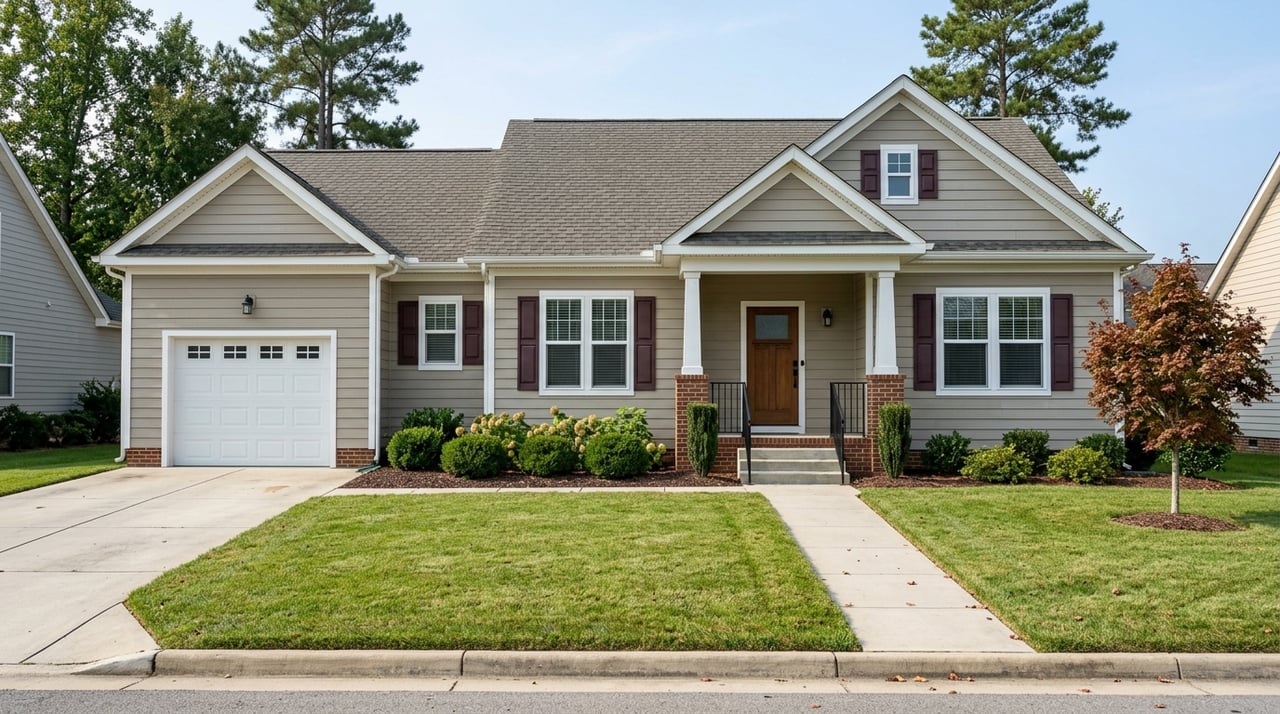
Bungalows are common in Pleasant Ridge and nearby Cincinnati neighborhoods. These homes are typically one-and-a-half stories, with a square or rectangular shape, low-pitched gable or clipped-gable roofs, wide eaves, and front porches.
You may also see a mix of exterior materials such as brick, wood, stone, or stucco. For buyers, bungalows often feel efficient and practical, with main living spaces on the first floor and bonus space tucked into an upper half-story or dormer area.
Colonial Revival homes
Simpler Colonial Revival homes are also common in neighborhoods developed between about 1905 and 1930, including Pleasant Ridge. These houses are usually square or rectangular, often two-and-a-half stories, with brick or clapboard siding, classical porches, dormers, and symmetrical front facades.
Inside, this style often feels more formal than a bungalow. You may notice a more balanced room arrangement and a layout that separates living spaces a bit more clearly.
Tudor Revival homes
Tudor Revival is one of Cincinnati’s most popular early 20th-century styles, and Pleasant Ridge buyers will likely see it in the neighborhood. Typical features include steeply pitched roofs, intersecting gables, half-timbering, brick or stone walls, casement or multi-pane windows, and large decorative chimneys.
Compared with a bungalow, a Tudor often has a more detailed exterior and a more complex roofline. Inside, that can translate into upstairs rooms with angled ceilings, smaller wall expanses, or a more segmented floor plan.
American Foursquare and similar homes
You may also come across homes that fit the American Foursquare form, even if listings do not use that exact term. Cincinnati preservation guidance describes these as simple two-and-a-half-story square or rectangular homes with minimal projections and a simple gable or hip roof.
In Pleasant Ridge, these homes often read as practical, boxy early-1900s houses that fall somewhere between the compact scale of a bungalow and the larger feel of some Colonial or Tudor homes. Their straightforward shape can also make them appealing to buyers thinking about updates over time.
What floor plans usually feel like
One of the biggest differences between Pleasant Ridge homes is how they live day to day. Since many houses were built in the early 20th century, the floor plans often reflect older design priorities rather than today’s fully open layouts.
Bungalows usually feel compact and efficient. Main living areas tend to stay concentrated on one floor, with extra space upstairs in a dormer or half-story.
Colonial Revival homes often feel more symmetrical and formal. Rooms may be more clearly defined, which some buyers love and others may want to update over time.
Tudor Revival homes often have less regular footprints. Because of steep roof shapes and more complex massing, upper-level rooms can feel more segmented or slightly smaller than you might expect from the exterior.
Foursquare-type homes tend to be more straightforward. Their simple massing often makes them easier to understand during a showing and easier to plan for if renovations are on your radar.
Expect updates, not perfect uniformity
If you are touring multiple homes in Pleasant Ridge, you should not expect the same renovation story from house to house. In practice, buyers are more likely to see a mix of original layouts and later updates than a neighborhood full of identical flips.
That can mean updated kitchens and baths, rear additions, and selective exterior changes that aim to fit the original home. Cincinnati preservation guidance emphasizes compatible additions, retaining original character, and repairing original materials when possible, so many older homes reflect that balance between improvement and preservation.
For buyers, this is where details matter. Two homes with similar square footage may feel very different depending on whether original features were preserved, whether additions were well integrated, and how much deferred maintenance remains.
Renovation rules to check early
If you are thinking about changing a home after purchase, it is smart to ask questions early. In Cincinnati, if a property is locally designated as a landmark or is located in a local historic district, exterior changes require a Certificate of Appropriateness review.
Interior-only work generally does not trigger that review if it does not affect the exterior. Still, before you assume you can replace windows, alter doors, or make major exterior updates, it is worth confirming whether city review applies.
Maintenance costs buyers should plan for
Older homes bring character, but they also bring ongoing maintenance. In Pleasant Ridge, major character-defining features often include roofs, porches, masonry, stucco, wood trim, chimneys, and older window assemblies.
Those same features are often the ones that need attention. Depending on the style, that may mean roof replacement on a bungalow, chimney and masonry work on a Tudor, or porch and dormer maintenance on a Colonial Revival home.
If you are budgeting for a purchase, try to look beyond cosmetic finishes. A fresh paint color or updated light fixture may catch your eye, but the bigger long-term costs often sit in the roofline, exterior materials, drainage, and structural components.
Why topography matters too
Pleasant Ridge’s hilltop setting can also affect what you should look for during showings and inspections. A city community plan describes the neighborhood as a relatively high-elevation area, and Cincinnati preservation guidance says site work should respect topography and hillside constraints.
For you as a buyer, that makes drainage especially important. On sloped lots, it is wise to pay close attention to grading, retaining walls, gutters, downspouts, and how water appears to move away from the house.
What this means for your budget
Pleasant Ridge is best understood as an older Cincinnati neighborhood with real architectural variety. Instead of expecting one standard home type, it helps to think in terms of a range.
At one end, you may find smaller bungalows or more modest early-20th-century homes. At the other, larger Colonial Revival or Tudor Revival homes often come with more square footage, more exterior detail, and more maintenance history to review.
That is why comparing homes here takes more than looking at price per square foot. You also want to weigh style, layout, exterior condition, renovation quality, and how much future upkeep fits your comfort level.
How to shop Pleasant Ridge wisely
When you are buying in a neighborhood with older homes, a little preparation goes a long way. Pleasant Ridge offers charm and variety, but it also rewards buyers who look closely at the details.
A few smart things to focus on include:
- The home’s architectural style and how that affects daily layout
- Whether updates feel compatible with the original home
- The age and condition of roofing, masonry, porches, and windows
- Drainage, grading, and site conditions on sloped lots
- Whether exterior renovation review could apply to the property
If you like homes with character, Pleasant Ridge can offer a lot to love. The key is knowing what comes with that charm so you can buy with confidence instead of surprises.
If you want help comparing home styles, renovation potential, and long-term value in Pleasant Ridge or anywhere in Greater Cincinnati, The Ernst Team is here to help you schedule your free consultation.
FAQs
What home styles are common in Pleasant Ridge, Cincinnati?
- Buyers in Pleasant Ridge are most likely to see bungalows, Colonial Revival homes, Tudor Revival homes, and some American Foursquare-type houses, often with mixed or vernacular features.
What should buyers expect from Pleasant Ridge floor plans?
- Buyers should expect many older layouts, including compact bungalow floor plans, more formal Colonial layouts, and Tudor homes with more segmented upper-level spaces.
What maintenance issues are common in Pleasant Ridge homes?
- Common concerns include roofs, porches, masonry, stucco, wood trim, chimneys, and older windows, along with drainage issues on sloped lots.
Do Pleasant Ridge homes in Cincinnati ever have renovation restrictions?
- Yes, if a home is a local landmark or located in a local historic district, exterior changes may require a Certificate of Appropriateness review from the city.
Is Pleasant Ridge mostly single-family housing?
- Yes, Pleasant Ridge remains primarily a single-family neighborhood, and detached homes are the largest structure type, though the area also includes renter-occupied housing.